English
Reading
We believe that reading is an important skill that supports children in all areas of learning. We aim to develop a love of reading by providing children with a range of engaging and enjoyable books and texts that inspire curiosity, 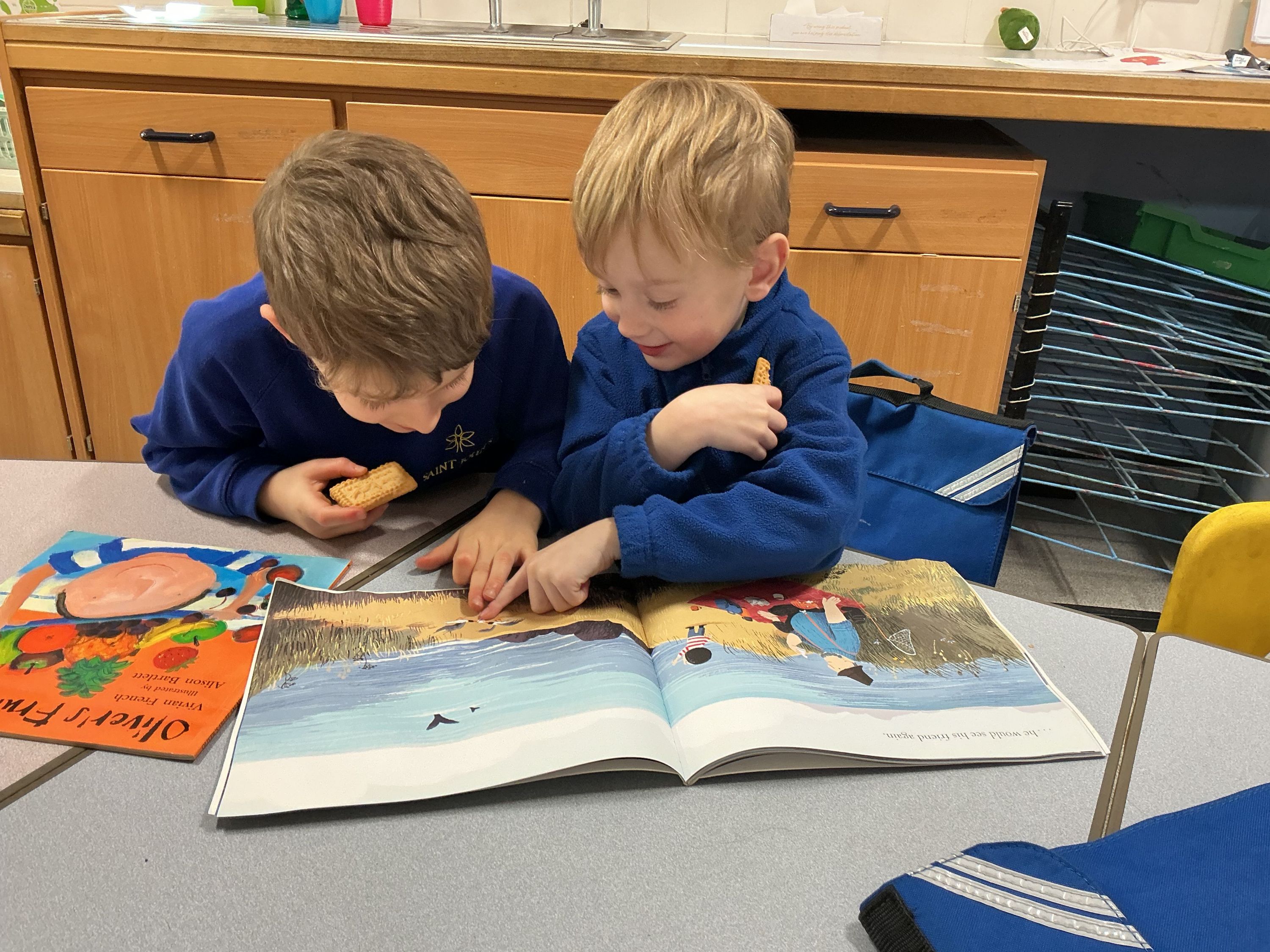 imagination and enjoyment.
Through our carefully planned reading curriculum, children develop the skills needed to become fluent, confident and enthusiastic readers. They are taught to read with accuracy, fluency and understanding while building key comprehension skills through high-quality teaching, discussion and a range of reading experiences.
The Oxford Reading Tree (ORT) reading scheme is used to support children in developing confidence and enjoyment in reading. The scheme provides a structured and progressive approach, with books carefully matched to children’s reading ability so that they can build skills gradually and experience success at every stage. The engaging stories, familiar characters and varied range of texts help motivate children and encourage a love of reading. Through the scheme, children develop key reading skills including decoding, fluency, vocabulary and comprehension, supporting them as they grow into confident and independent readers.

At Saint John's, we use VIPERS to develop and strengthen children’s reading comprehension skills. VIPERS provides a clear and structured approach to helping pupils understand and think deeply about the texts they read. Through carefully planned lessons and discussion, children learn to become active and thoughtful readers.
VIPERS focusses on six key areas of reading comprehension:
- V – Vocabulary: understanding and exploring the meaning of words and phrases
- I – Inference: using clues from the text to understand meaning beyond what is directly stated
- P – Prediction: using evidence from the text to make sensible predictions
- E – Explanation: explaining ideas, opinions and understanding using evidence from the text
- R – Retrieval: finding and recalling information from a text
- S – Summarising/Sequencing: identifying key events and summarising important information
By using VIPERS across the school, children develop the confidence to discuss texts, justify their ideas and deepen their understanding. This approach supports pupils in becoming fluent, independent readers who can think critically and engage meaningfully with a wide range of texts.
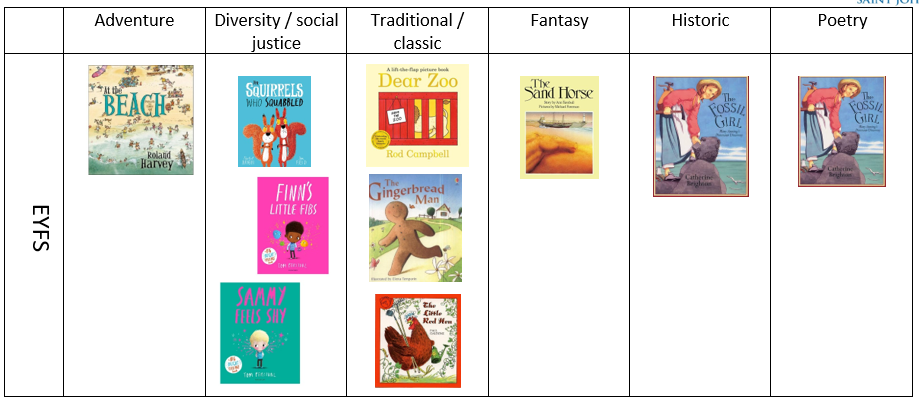
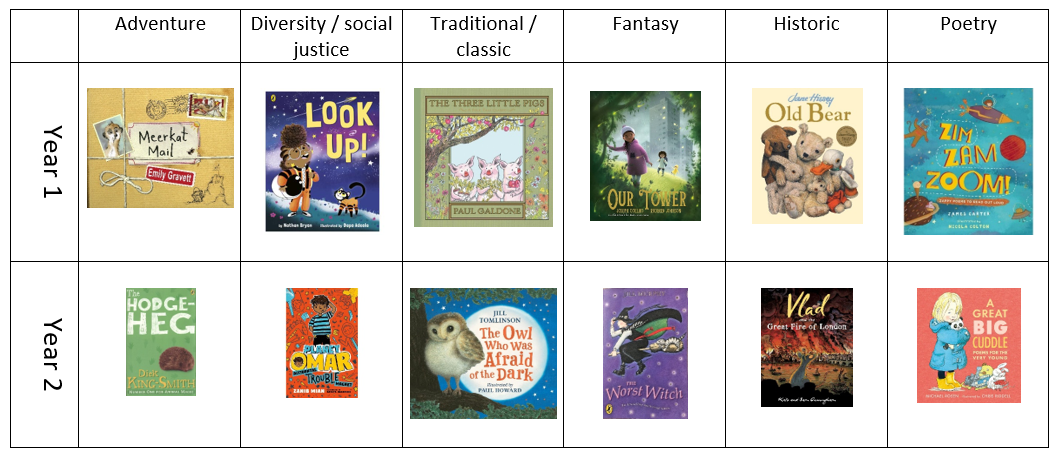
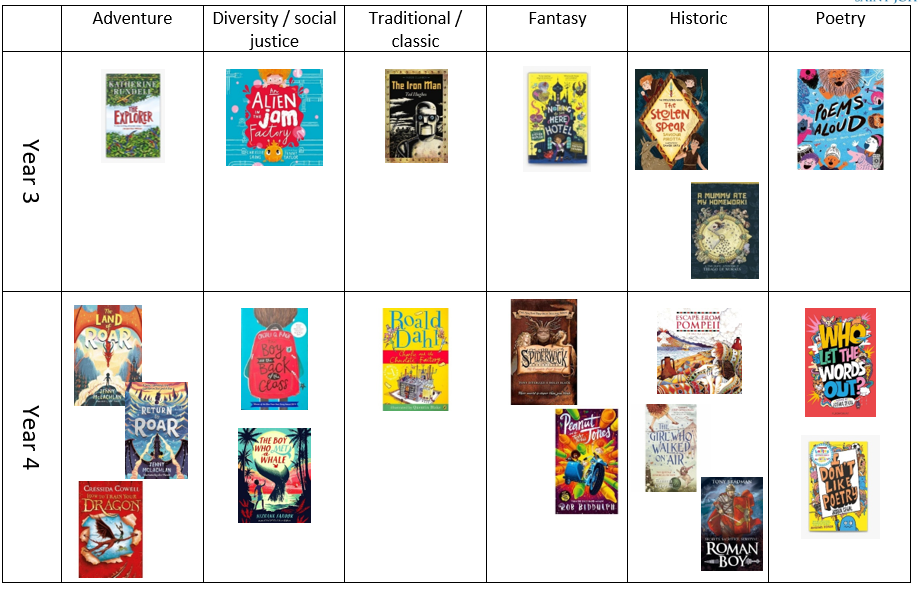
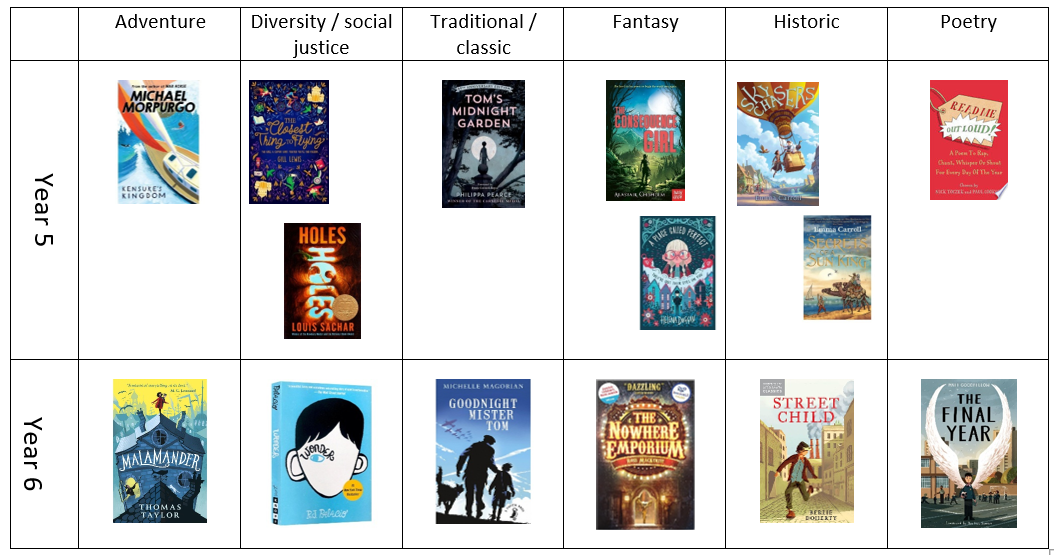
At Saint John's, every class enjoys a daily class read, with carefully selected, high-quality texts that inspire a love of reading and enrich learning across the curriculum. Class novels may be chosen as independent reads, linked to a cross-curricular topic or used to support the English writing curriculum. Throughout the year, children experience a wide range of genres and themes, including adventure, traditional tales, historical fiction, fantasy, classic literature and books that explore diversity and social justice, ensuring they develop broad reading experiences and discover new authors, perspectives and styles. In some year groups, children are offered a choice of books within each genre, giving them the opportunity to help select their next class novel and encouraging greater engagement with reading.
EYFS:
Key Stage1:
Lower Key Stage 2:
Upper Key Stage 2:
We enrich children’s reading experiences through a variety of opportunities beyond the 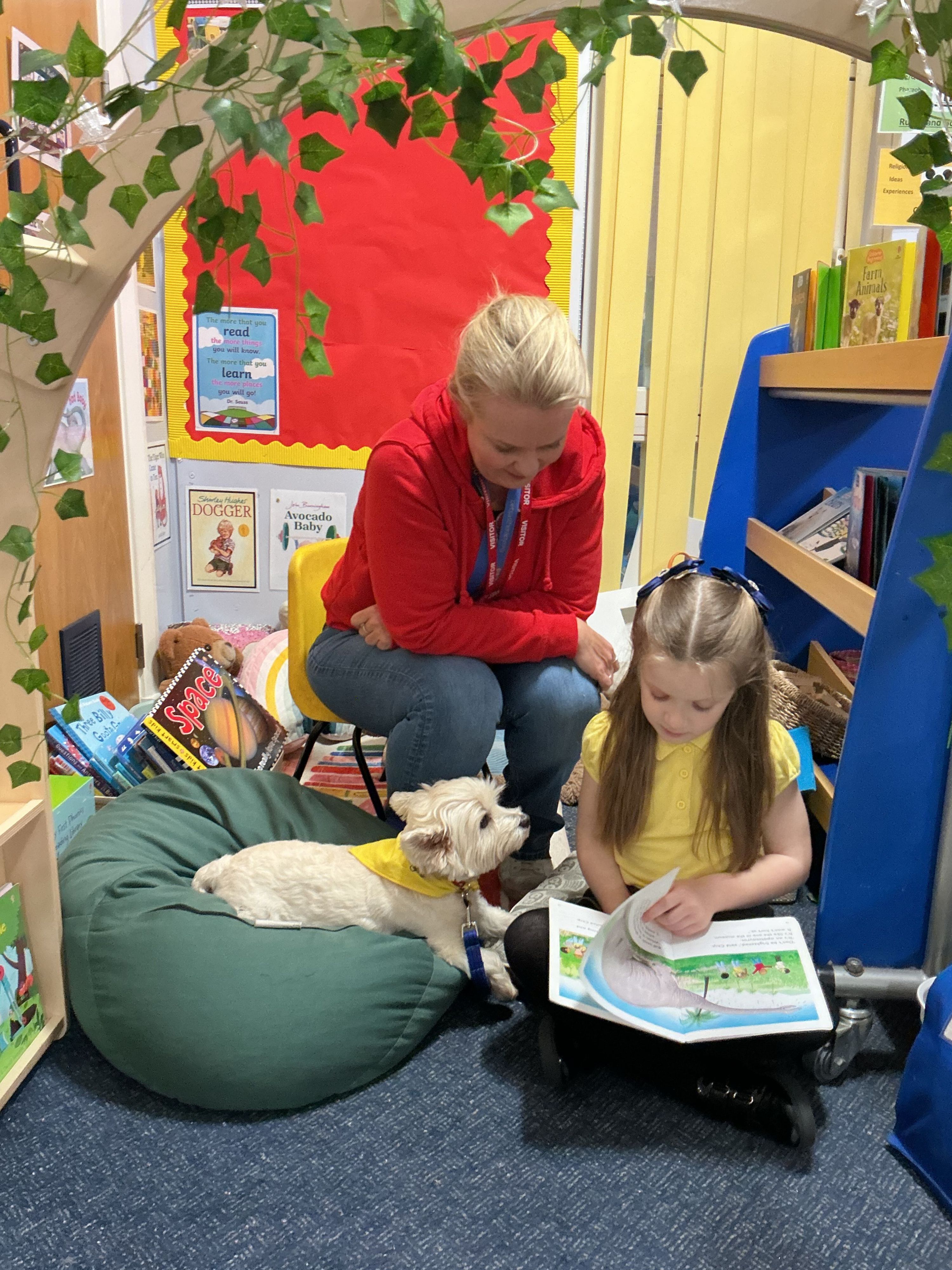 classroom. Pupils take part in visits to local libraries and trips to Waterstones, helping them discover new books, authors and genres while encouraging excitement around reading. Children also participate in wider literary experiences, including the Cheltenham Literature Festival, where they can engage with authors, poets and storytellers. We also celebrate World Book Day each year through a range of exciting activities that encourage children to share and celebrate their love of books.
We encourage children to read widely and often, both at school and at home, exposing them to a broad range of authors, genres and cultures. By developing a lifelong love of reading, we strive to ensure that every child becomes a successful learner who is equipped with the skills needed for the future.
Reading for Pleasure is an important part of our approach to reading and helps children develop positive attitudes towards books and reading. We aim to create a culture where children enjoy reading and see it as an enjoyable experience both in school and at home. Through engaging class texts, opportunities to explore different authors and genres, book discussions and inviting reading environments, children are encouraged to discover books that interest and inspire them. By developing enjoyment in reading, we hope to nurture confident, enthusiastic readers with a lifelong love of books.
_______________________________________________________________________________
Writing
The Write Journey
Saint John's has committed to a two year programme called “The Write Journey”,  led by the Local Authority, Gloucestershire Schools Alliance and the EEF. This is to improve outcomes in all pupils' writing but especially that of the Pupil Premium children. The aim is to improve writing across primary schools and into secondary, so that the gap closes for Pupil Premium pupils at the end of Key Stage 3.
Talk for Writing
We use Talk for Writing and, over the years, we have developed our curriculum, choice of texts and adapted resources to the teaching needs of our pupils. We use the 'Writing Curriculum Progression of Skills and Knowledge' document to plan and assess next steps.
The Talk for Writing approach enables children to read and write independently for a variety of audiences and purposes within different subjects. A key feature is that children internalise the language structures needed to write through ‘talking the text’, as well as close reading. The approach moves from dependence towards independence, with the teacher using shared and guided teaching to develop the ability in children to write creatively and powerfully.
The 'Talk for Writing' process is used from Reception through to Year 6. As a school, we have mapped out the key texts being taught in each year group. Please see our 'Talk for Writing Text Overview'.
High Fives
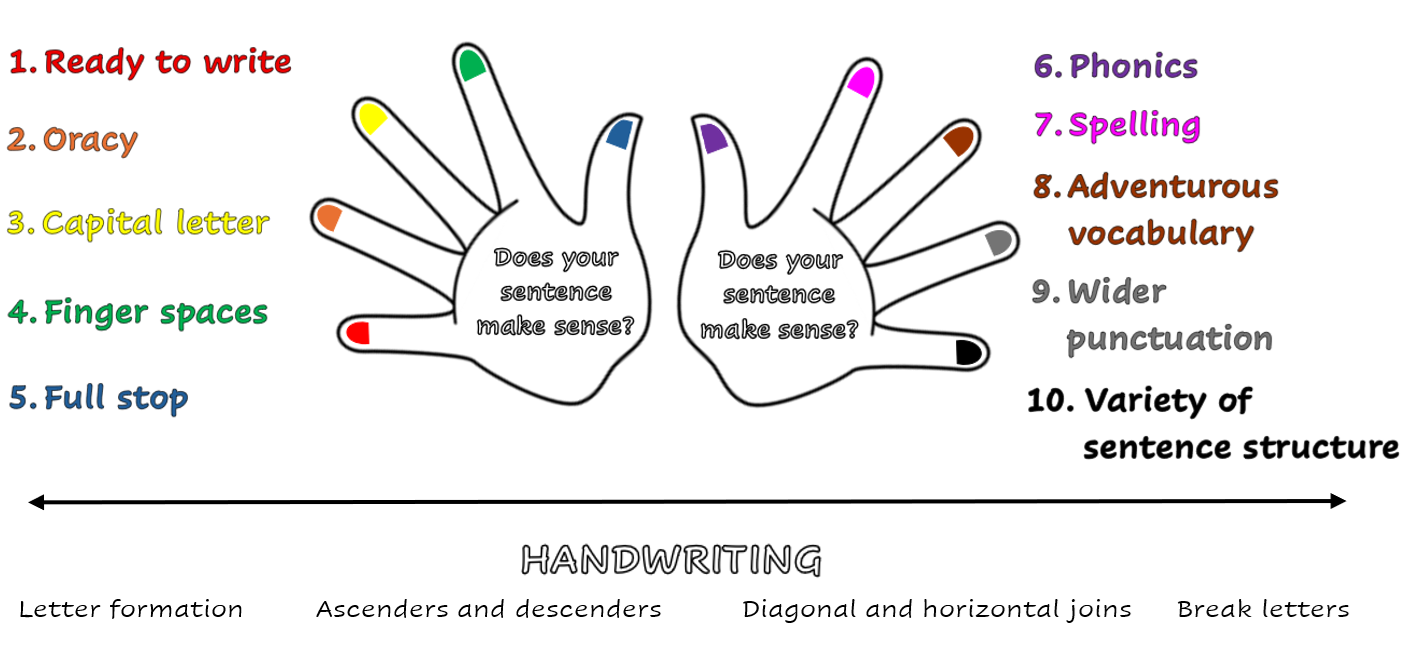
We use our 'high five, high five, good sentence' model across the school. The fingers on each hand represent components of a sentence. These start with the foundational skills that are taught in Reception and are built upon throughout the school. Children use 'high fives' throughout the writing process to support their writing and when they edit their work.
Handwriting
We use 'Kinetic Letters' for handwriting with its focus on teaching the mastery of the physical and cognitive components of handwriting, with animals to make it fun! The scheme is followed from Reception to Year 4 and is then used as an intervention in Years 5 and 6.

Spelling
We use 'Spelling Shed' for spelling, with its focus on the relationship between sounds and written symbols, as well as using morphology to help spell through meaning. The scheme is followed from Year 1 (Stage 1) to Year 6 (Stage 6). Please see the overview for each stage.

_____________________________________________________________________________________
Supporting your child at home
There is a great deal that can be done at home to support children in developing these foundational skills.
- TALKING: Talk about things you see in the book - who's in it, what they did and where they went. Help them to learn new words. Talk about what different words mean and tell your child the name for anything they don't know.
- READING: When learning to read, pictures can be just as important in a storybook as the words. Help your child to work out what the story is about or what a word might say using the pictures. Make a book part of your bedtime routine - share a story, snuggle up and get chatting. Have toys that relate to books like The Gruffalo or Spot the Dog - children can act out stories using these as characters. This will help them to learn to tell stories based on what they've read and heard.
- WRITING: Make sure there is a stack of paper and pencils available, encouraging children to make little books, write/draw on postcards, send notes to family/friends. Try to make lists (shopping lists are a great example) on paper with your child. We know how tempting it is to do this on a phone/device, but try to use pen and paper regularly.