Religious Education (R.E.)
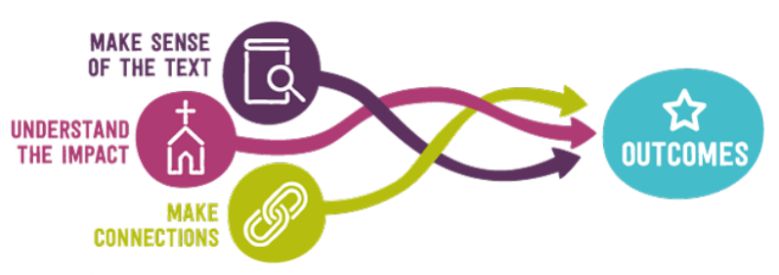
We follow an exciting and ambitious curriculum from Reception to Year 6. Each topic has an enquiry question to focus the learning, which then has a set of steps towards a goal. The children's learning is also celebrated with specific outcomes at the end of each topic. For example, we might create exhibitions, perform plays or showcase work completed. Teachers plan for cross-curricular opportunities wherever possible. The year is peppered with special days. These days provide pupils with an opportunity to examine a specific area in more detail, providing independent thinking and challenge.
Our Subject Leads work in teams so that they can share ideas and prepare and plan together for different subjects. Below is information for each group of subjects. For each of the subjects, we have developed our intent, implementation and impact statements to align with National Curriculum aims and with our school vision and aims. In that way, the curriculum on offer to our Saint John's pupils is specific and relevant to each of them, ensuring that we grow their learning from their diverse roots, challenging them to reach up and reach out and preparing them for their lives in our community and beyond.
Intent
At Saint John’s, our intention is to see our pupils leave school with a coherent understanding of Christian belief and practice, alongside developing their wider religious, theological and cultural literacy. We ensure that pupils explore their own responses to Christian beliefs, as expressed in the Bible and lived out in the lives of Christians both today and in the past, whilst also considering responses of those who are atheist, agnostic or from a faith tradition other than Christianity.
The aims of Religious Education (RE) are:
- To enable pupils to know about and understand Christianity as a living faith that influences the lives of people worldwide and as a religion that has most shaped British culture and heritage
- To enable pupils to know and understand about other world religions and world views, their impact on society, culture and the wider world, enabling pupils to express ideas and insights
- To contribute to the development of pupils’ own spiritual convictions, exploring and enriching their own beliefs and values.
Our focus at school is to ensure that our RE curriculum focuses on our key aims of encouraging pupils to be caring for others and themselves; showing pupils how they can develop citizenship with a recognition and celebration of diversity and inclusion; ensuring pupils are given challenge and support in their academic learning and personal development and increasing their understanding and knowledge of their own community and those which they will join in the future. In line with the Gloucester Diocese, RE is a valued academic subject providing opportunities for pupils to explore and discover what people of all faiths and world views believe and what difference this makes to the way they live. RE should also ensure pupils flourish as they gain the knowledge, understanding and skills needed to handle questions raised by religion and belief and reflect on their own ideas and ways of living. Please see the Diocese Statement of Entitlement and further information at the following link: https://www.gloucester.anglican.org/welcome-2/schools/primary-religious-education
Promoting the spiritual, moral, social and cultural development (SMSC) of pupils is a whole-school responsibility. RE contributes to SMSC through both the subject matter of the curriculum and the attitudes and actions developed in the classroom.
Spiritual development:
Pupils will have the opportunity to recognise, appreciate and appraise the impact the biblical text can have on the lives of individuals, within and outside the Christian community. As they explore the challenge the text has for believers, they will have opportunities to consider their own views and reflect on how the Bible presents a way of understanding the world and human nature.
Moral development:
Alongside the moral and ethical issues that are dealt with in the texts studied, and their own responses to matters of right and wrong, this approach encourages pupils to develop their ability to interpret texts.
Social development:
There is a recognition that all readers come to texts from different perspectives and that texts can be read for a range of purposes. Learning that people interpret texts differently is important so that pupils recognise that this applies to biblical interpretation within and outside the Christian community and to other texts, religious or otherwise.
Cultural development:
As pupils explore texts and their cultural contexts, they develop understanding of the core Christian concepts and their impact within and beyond the diverse Christian community. This begins to enable pupils to recognise the contribution of Christianity to Western culture, and perhaps particularly the contribution of the Bible to the arts. This plays a part in a wider cultural development promoted in RE, such as appreciating the diversity of religious and non-religious beliefs in local, national and global contexts.
Other aspects of Religious Education include:
- Our collective worship each day focuses on our Christian value for the term and this can often be linked with the RE teaching in the class.
- Our aim in collective worship is: to learn, to reflect and to live out our Christian understanding, knowledge and values.
- Christian values are celebrated and referred to in our classrooms, with displays and reflective areas to encourage our children to think deeply and reflect on spiritual matters.
- Outside, there are places where children can reflect and respond to their own needs or the needs of others - in our beautiful front garden, in our reflective space in the Reception Green Garden and on our Buddy Bench or Bradford Room in the main playground. These are places where there can be moments of stillness and reflection even when surrounded by noise and excitement!
- Our reflective journals (floor books) for each year group: large A3 display books record our reflections and thoughts during our learning about values, as well as experiencing special events in school, and we encourage the children to express their emotions, thoughts and ideas as a whole-class.
- Faith leaders are invited to the school and visits to places of worship are arranged during the children's time at Saint John's.
The new syllabus guiding our new curriculum
A new Agreed Syllabus, published through the Gloucester Diocese, was introduced in Summer 2026. We have reviewed and updated our R.E. curriculum, planning and resources. Below is an overview of the new curriculum, as well information regarding implementation. Because we are a Church of England primary school, we continue to retain Christianity as a core element of our R.E. teaching, whilst recognising our diverse community of different faiths and none and the need for our children to gain understanding and learn tolerance of those who have a different world-view to their own. We are excited by the range of resources and the intention to engage the children in "living faiths", rather than textbook-centred learning.
If you have any questions about our teaching of R.E., please do not hesitate to be in touch with the office.
The Right of Withdrawal from Religious Education
At Saint John's, RE is an important part of our broad and balanced curriculum. It helps pupils explore and understand a range of religious beliefs and worldviews, encouraging respect, tolerance, and curiosity about the world around them. Our RE curriculum is designed in line with the locally agreed syllabus and reflects the diverse nature of modern Britain.
What does the law say?
Parents and carers have the legal right to withdraw their child wholly or partly from Religious Education (RE), as set out in the Education Act 1996. This includes both classroom-based RE lessons, Collective Worship and, where relevant, visits linked specifically to the RE curriculum. This right applies to all pupils in all maintained schools in England, including academies.
There is no requirement for parents or carers to explain their reasons for seeking withdrawal. However, we do encourage you to speak with a member of the leadership team so we can discuss any concerns, clarify what is taught, and explore possible solutions.
Our approach
At Saint John's, RE is taught in an inclusive, objective and respectful manner. We aim to foster understanding and awareness of different religious and non-religious worldviews. We believe this is vital in preparing pupils for life in a diverse society and in promoting British values such as mutual respect and individual liberty.
Where parents choose to withdraw their child, the school will make reasonable arrangements. This may include supervised alternative work. However, please be aware that we are not required to provide alternative curriculum content during this time.
How to request a withdrawal
If you are considering withdrawing your child from RE lessons, please:
- Contact the office to arrange a meeting with the Headteacher.
- Confirm your decision in writing, outlining whether the withdrawal is full or partial.
We remain committed to working in partnership with families and will do our best to accommodate individual needs while upholding our responsibilities to deliver a rich and inclusive curriculum.